


When Precision Metal Stamping Is Required
Precision metal stamping is typically selected not because of shape, but because an application cannot tolerate variation.
It is used when:
Parts must fit without adjustment
Assemblies rely on repeated positioning
Manual correction is not acceptable
Interchangeability between batches is required
In these cases, standard stamping methods are often insufficient.
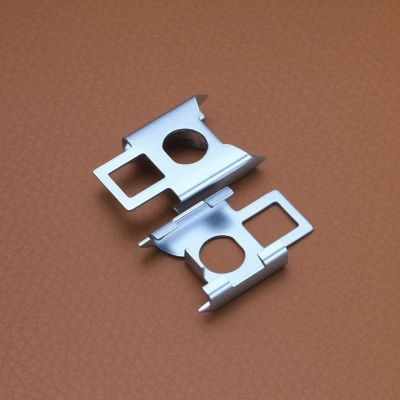
How Precision Is Evaluated
Precision metal stamping is judged by performance results, not by process names.
Key evaluation points include:
Whether parts can be assembled directly
Whether hole locations remain consistent over time
Whether formed angles repeat across production runs
Whether part geometry stays stable after packaging and transport
If these conditions are met, the stamping process qualifies as precision-level.
Design Characteristics of Precision Stamped Components
Precision metal stamping is usually applied to components with:
Functional hole patterns
Alignment-critical edges
Load-bearing bends
Interfaces with other metal or plastic parts
The design itself defines the precision requirement, not the material alone.
Material Behavior in Precision Stamping
Material selection affects stamping accuracy mainly through deformation control.
Common considerations include:
Elastic recovery after forming
Thickness consistency
Grain direction influence
Surface hardness stability
Materials are chosen and processed to minimize dimensional drift during forming.
Hot Tags: precision metal stamping for high-accuracy component manufacturing, Chinaprecision metal stamping for high-accuracy component manufacturing manufacturers, suppliers, factory, stamped metal part, metal stamping part, precision metal stamping part, precision metal stamping, stamped titanium part, high precision metal stamping


